Articles

Wales Online – 27 November 2015

Public Service Broadcasting performed their unique :duties with foot-tapping wizardry

Electronic wizards Public Service Broadcasting had Cardiff Union’s Y Plas bouncing!

★★★★☆

By Tony Woolway

To the uninitiated, Public Service Broadcasting can appear a bit of an enigma.

They are certainly not your regular band, in that they don’t have a singer per se, preferring to use an odd combination of old newsreel footage, public information films, as their name would suggest, plus a whole load of geeky weirdness all thrown together to enhance a quite diverse electronic mishmash of technology .

Comprising the intriguingly named J. Willgoose, Esq, guitar and keyboards and Wrigglesworth, drums, this London-based duo have created a fairly unique sound and look that is both innovating and inspirational with their merging of the old and the very new.

It was a treat to see a banjo and a flugelhorn alongside an array of keyboard wizardry and it was this contrast and eclectic mix that both dazzled and amazed.

Aaided and abetted by the occasional brass section and the talented J F Abraham on bass, keyboards, percussion and the previously mentioned flugelhorn plus Mr B in charge of the equally impressive visuals of a mostly bygone age, giving the evening a creaky fifties feel.

With the only interaction verbally between the band and audience being a sampled Stephen Hawking-like computer generated voice triggered by a pad, the band certainly played up to their image but with their tongues firmly in their cheeks.

Their swotty appearance proving deceptive one as they as they set about creating a tasty brew of foot-tapping funk, pop electronica.

From their chilled intro into a pulsating Sputnik it was pretty rousing stuff played in a good-humour that delighted the packed crowd, with Go! From their latest offering The Race For Space keeping the momentum going and the crowd bouncing.

Though it was Everest, near the end, with stark black and white images of Hillary and Tenzing complementing the sweeping music perfectly that provided the evening’s highlight and in true pioneering fashion, a flag firmly placed on a musical peak.

Source : https://www.walesonline.co.uk/whats-on/music-nightlife-news/public-service-broadcasting-performed-unique-10512446

South Wales Argus | 27 November 2015

Public Service Broadcasting – Cardiff University Student Union

By Steven Prince

IT was fitting that Public Service Broadcasting chose to make their Welsh return to Cardiff University’s student union on Thursday.

Music which aims to teach lessons of the past through modern dexterity was warmly received by the crowd – raucous in their reverence – of the conceptual band.

The London duo launched their UK tour, which has been truncated due to personal reasons, in style – bringing their signature audio-visual transmissions to the Welsh capital.

Consisting of multi-instrumentalist J. Willgoose Esq., and drummer-cum-percussionist Wrigglesworth, a musical cavalcade of differing genres ensued – as well as themes.

The most recent album, The Race for Space, understandably covers humankind’s assent to the stars but the pair are not afraid to push the boundaries of time as well as space.

Historical moments featured prominently throughout the performances, from the delivery of mail on steam trains to the stiff upper lip shown by Britain during the Blitz to Dutch long-distance speed skating.

What is most enjoyable about the cacophony of lights and sounds is the variety in the performance – a fusion of synths, banjos and archive footage with the staple drums and guitar of modern music.

The pair, akin to two history teachers found marooned in the music department of any secondary school, are a force to be reckoned with due to the avenues open to their music

Source : https://www.southwalesargus.co.uk/leisure/reviews/14109167.display/

The News | 24 April 2015

Public Service Broadcasting keep looking to the stars in the Race for Space

The Space Race marked unparalleled period of exploration and technological advance for mankind.

But curiously it all now seems rather antiquated and the time is dusted with nostalgia.

However Public Service Broadcasting have taken a fresh look at the 15 years from 1957 to 1972, using archival footage and combining it with cutting edge music.

As PSB mainman J Willgoose, Esq, says: “It’s incredible when you think this was over 40 years ago. We put men on the moon and then stopped. It’s not often that we step backwards from an achievement in technology and it doesn’t get revisited.

“The political expediency left I suppose. You need the right historical circumstance that fuelled this incredible period, when they had the reason and the excuse to spend the money on these kind of endeavours.

“I think it’s an interesting example of how humanity pushed itself forward – how this creative thrust can come out of something intended for destruction”.

“I think it’s an interesting example of how humanity pushed itself forward – how this creative thrust can come out of something intended for destruction”.
J Willgoose, Esq

The Race For Space takes us from the launch of Sputnik 1 through the Afrobeat-with-balalaikas tribute to the first man in space, Gagarin, the Apollo 1 disaster, and the eventual moon landing.

After the success of 2013’s debut album Inform-Educate-Entertain, J says he already had an idea about where he wanted to go next: “I thought this would be an EP or mini-album, I never thought it would be a full-blown album but when I started working on it, it became eight tracks quite quickly and by then it’s an album”.

The new album was debuted at The National Space Centre in Leicester in February.

“The live show is a bit of an evolution rather than a revolution – we’ve got a few more special bells and whistles”, says J. “We have built our own LED Sputnik, and we’ve got a whole bunch of other visual effects. We also have a third member joining us on stage, JF Abraham who is playing a bit of brass, keys and percussion. It’s a bigger sound and more musically involved show.

Support comes from Chichester’s Smoke Fairies who appear on The Race For Space’s tribute to the first woman in space, Valentina Tereshkova. “The way they did it, they’ve been quite brave”, says J of their contribution. “I would find it terrifying to go into a studio and do what they did.

“They definitely pushed the song in a direction it wouldn’t have otherwise gone in”.

They play at The Pyramids Centre tonight, doors 7pm. Tickets £19.25.

The Arts Desk | 29 juin 2017

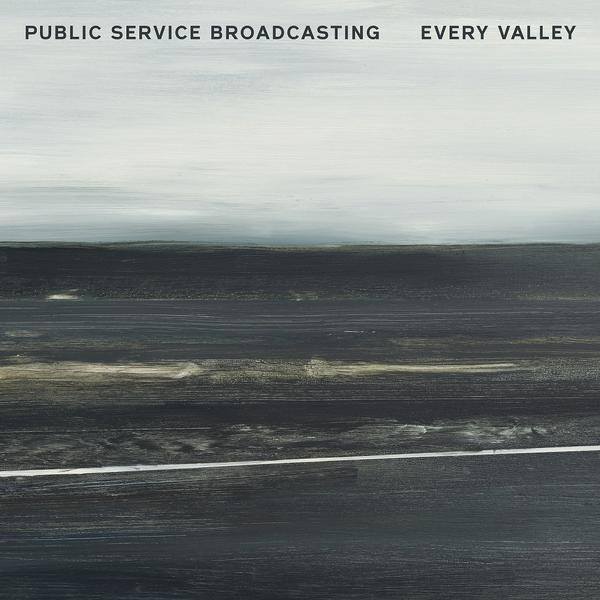
CD : Public Service Broadcasting – Every Valley

Le troisième album de PSB vire trop vers l’infotainment

Guy Oddy

Every Valley est le deuxième album studio de Public Service Broadcasting depuis Inform-Educate-Entertain de 2013, et comme ses prédécesseurs, c’est un voyage nostalgique vers le passé pas si récent que cela avec une toile de fond lourdement éléctronique et un sac plein de samples choisis de la bibliothèque du British Film Institute.

Tandis que J Willgoose Esq et Wrigglesworth ont pu être inspirés par les chemins de fer à vapeur et la course à l’espace sur les disques précédents, Every Valley voit le duo londonien prendre la mort de l’inductrie du charbon dans le Sud du Pays de Galles et son impact social comme source. Si cette terminologie sonne un peu sèche et académique, elle reflète l’ambiance de l’album, qui semble au bout du compte comme de “l’infotainment” valide avec de la musique que les saveurs electronica-trance-krautrock habituelles de Public Service Broadcasting.

Pour les premiers morceaux, Every Valley n’est pas surprenant pour les auditeurs de longue date de l’attaque particulière de Public Service Broadcasting sur l’idée de l’album concept. Mais au fur et à mesure, J Willgoose Esq et Wrigglesworth commençent à introduire des changements à leur son en incorporant des chanteurs invités comme Tracyanne Campbell, Lisa Jen Brown et James Dean Bradfield des Manic Street Preachers. Tandis que cela fonctionne sur la pop à la Goldfrapp de Progress et le duo anglo-gallois de You + Me, Turn No More semble être une opportunité perdue. Au lieu de sortir de sa zone de confort et d’essayer quelque chose de différent, Bradfield semble interpréter de manière terne un morceau de rock assez standard qui fait sonner ses hôtes comme son propre groupe.

Alors que Every Valley peut être un hymne attachant à l’idée de la “communauté”, il y a aussi un sentiment qu’il romantise un emploi qui était sale, dangereux et, dans plus de cas que possible, mortel pour tous ceux sur le front (littéral) de taille. De même, il ne fait pas attention aux retombées environnementales de l’industrie du charbon et semble par conséquent légèrement peu satisfaisant dans son échec à raconter plus que cette partie de cette histoire particulière.

★★☆☆☆

Traduction : 24 février 2024

The Arts Desk | 29 June 2017

CD: Public Service Broadcasting – Every Valley

PSB’s third veers too close towards infotainment for comfort

Guy Oddy

Every Valley is Public Service Broadcasting’s second studio album since 2013’s Inform – Educate – Entertain, and like its predecessors, it’s a nostalgic trip to the not-too-recent past with an electronica-heavy backing and a bag full of samples culled from the spoken word library of the British Film Institute.

While J Willgoose Esq and Wrigglesworth may have been inspired by steam-powered railways and the space race on previous discs, Every Valley sees the London duo take on the death of the coal industry in South Wales and its social impact as their source material. If this terminology sounds all a bit dry and academic, it reflects the ambience of the album, which ultimately comes across as worthy “infotainment” with tunes rather than Public Service Broadcasting’s usual electronica-trance-krautrock flavours.

For the first few tracks, however, Every Valley holds no surprises for long-time listeners of Public Service Broadcasting’s own particular take on the concept album idea. But as things unfold, J Willgoose Esq and Wrigglesworth begin to introduce some changes to their sound by bringing in guest vocalists like Tracyanne Campbell, Lisa Jen Brown and Manic Street Preacher’s James Dean Bradfield. While this works on the poppy Goldfrapp-like “Progress” and the folkie bilingual Welsh-English duet “You + Me”, “Turn No More” does seem something of a lost opportunity. Instead of stepping outside his comfort zone and trying something different, Bradfield rather uninspiringly performs a pretty straight-forward rock number that just makes his hosts sound like his own band.

While Every Valley can be quite an endearing hymn to the idea of “community” there is a sense that it also romanticises a job that was dirty, dangerous and, in more cases than seem possible, life-shortening or life-ending for those at the (literal) coalface. It similarly pays no attention to the environmental fall-out from the coal industry and consequently feels slightly unsatisfying in its failure to tell more than part of this particular story.

★★☆☆☆

The Arts Desk

Soundlab | 6 July 2017

PUBLIC SERVICE BROADCASTING – EVERY VALLEY

D R Pautsch

Rating: 9
Release Date: 2017-07-07
Label: Play It Again Sam

When Public Service Broadcasting released their first album Inform-Educate-Entertain in 2013 it left many questions, despite its obvious brilliance.  Primarily it was difficult to see how this approach of instrumentals spiced with PSB dialogue would not grow very old very quickly.  On their first effort the approach was varied and covered such subjects as the SpitfireNight Mail and Everest.  However that question was largely answered with their excellent, rousing and more focused Race for Space follow up that came two years later.  This approach was to focus on a single subject and it told the story of the race for space from both US and USSR angles, being poignant, moving and at times as sparse as its subject matter.  It also showed that when marrying a piece of original music to an old John F Kennedy speech it could turn into almost propaganda.  There was also a move towards having original vocals with Smoke Faeries guesting on one track.  Their third album sees them further explore this approach on what at first might seem like a smaller scale but actually may have hidden depths and meanings and might just be one of the most timely albums released this year.  PSB have decamped to Wales and in particular Ebbw Vale to tell the story of the Welsh mining towns.  Hiring some Celtic vocals, including James Dean of the Manic Street Preachers they follow the rise, fall and aftermath of Welsh coal.

Of course it is nigh on impossible to remove any politics from this subject matter as it is so deeply entrenched in the whole fall of the Welsh mines.  And on first listen it would appear that this is a tale of Welsh mines alone.  However, the arc could depict Detroit with its demise of the motor industry or any other abandoned industrial powerhouse where progress has apparently left the workforce long behind, bereft of jobs, hope and a future.  In particular on this effort, the counterpoint of the elocutionary perfect delivery of Public Service Broadcasts telling the listener that there will always be a need for Welsh coal, as it does on People Will Always Need Coal, sounds both condescending and like the very kind of propaganda we are hearing on a daily basis from our current ruling classes.  The whole album has a very definite arc from the promise of jobs for centuries to the ruination of an entire industry and the broken promises and lives.  The centre of this is the attacking guitars and Welsh voiceovers of All Out.  This is an almost metallic riff that gives way to allow the workers to tell their story before the assault continues anew. It’s a snarling beast of a number which accurately depicts the confrontation and feelings at the time and perhaps ever since.

The guest vocals are interspersed between the instrumental numbers.  The most headline grabbing will be James Dean Bradfield’s turn on Turn No More which concerns the end of a pit and the final turn of the pit wheel.  Its ringing guitar almost sounds like MSP at times but with an undertone of foreboding that can only belong on an album such as this. That is until the denouement where the pride begins to return and with it the true grit and defiance that has been there since.  Camera Obscura’s Traceyanne Campbell gives a lighter to touch to the adrenaline filled Progress which is both welcome and needed.  You Me also sees PSB break from their rules where their leader J Willgoose Esq provides the English counterpoint to Jen Brown’s welsh vocals.  This is a light number full of strings and could be one of the most beautiful moments PSB have produced thus far.

Of the instrumental numbers They Gave Me A Lamp stands out alongside All Out as one of the most moving moments.  This tells the story of the women in the mines and how they stood shoulder to shoulder with the men. 

Of course there are still the odd nagging doubts about PSB.  Is the underlying music different enough each time?  Sometimes you almost feel it isn’t but this is often transcended by the subject matter and honestly how many bands plough the same furrow on each album anyway?  The inclusion of a voiceover by Richard Burton, telling of the pride of Welsh miners on the opening title track is a reminder of the lyrical honey that voice once lent to War of The Worlds and perhaps it’s too close for comfort.

This is an album which provides far more poignancy with its subject matter and approach than would on the face of it be expected.  That it is not laid on with a trowel is to be commended and actually makes it far more effective.  Of course the tail end of the album can only be a more mournful affair than the false promises contained at the start.  And inevitably this album ends the only way it can, with a Welsh voice choir.  The unique approach of PSB might have found a ream seam here and perhaps one that reflects as much on our past as our present and sadly our potential future.

Soundlab

Soundlab | 6 juillet 2017

Public Service Broadcasting – Every Valley

D R Pautsch

Note : 9
Date de sortie : 07/07/2017
Label : Play It Again Sam

Quand Public Service Broadcasting a sorti son premier album, Inform-Educate-Entertain, en 2013, il posait de nombreuses questions, malgré sa manifeste excellence. Premièrement, il était difficile de voir comment cette approche d’instrumentales relevées de dialogue de films d’information publique n’allait pas beaucoup vieillir très rapidement. Sur leur première sortie, l’approche était variée et couvrait des sujets comme le Spitfire, le Night Mail et l’Everest. Cependant, cette question a grandement été répondue avec leur excellent successeur passionné et plus focalisé, The Race For Space, qui est sorti deux ans plus tard. Cette approche était de se concentrer sur un seul sujet et il racontait l’histoire de la course à l’espace des deux angles américains et soviétiques, étant poignant, émouvant et parfois aussi épars que son sujet. Il démontrait également qu’ne mariant un morceau de musique original à un vieux discours de John F Kennedy, cela pouvait se transformer presque en propagande. Il y avait aussi un pas en avant en ayant du chant original avec les Smoke Fairies en invitées sur un morceau. Leur troisième album les voit explorer cette approche plus loin sur ce qui pourrait sembler au départ une échelle plus petite mais qui pourrait en fait avoir des profondeurs et des significations cachées et qui peut être l’un des albums les plus opportuns sortis cette années. PSB ont décampé au Pays de Galles et en particulier à Ebbw Vale pour raconter l’histoire des villes minières galloises. Employant des voix celtiques, dont James Dean Bradfield des Manic Street Preachers, ils suivent la montée, la chute et les conséquences du charbon gallois.

Bien sûr, il est presque impossible de retirer la politique de ce sujet étant donné qu’elle est enracinée tellement profondément dans toute la chute des mines galloises. Et à la première écoute, il semblerait que c’est un conte sur les mines galloises uniquement. Cependant, l’arc pourrait représenter Detroit avec la mort de l’industrie automobile ou n’importe quelle centrale électrique abandonnée où le progrès a apparemment laissé leur main-d’œuvre derrière depuis longtemps, dépourvue d’emplois, d’espoir et d’avenir. En particulier sur ce disque, le contrepoint du discours élocutoire parfait de Public Service Broadcasts disant à l’auditeur qu’il y aura toujours un besoin en charbon gallois, comme c’est le cas sur People Will Always Need Coal, sonne à la fois condescendant et comme la propagante même que nous entendons au quotidien de nos classes dirigeantes actuelles. Tout l’album a un arc très défini de la promesse d’emplois pour des siècles à la perte de toute une industrie et les promesses non tenues et les vies brisées. Le centre de tout cela sont les guitares qui attaquent et les voix galloises de All Out. C’est un riff quasi métallique qui ouvre la voie pour permettre aux ouvriers de raconter leur histoire avant que l’assaut continue à nouveau. C’est un morceau bestial rugissant qui dépeint avec précision la confrontation et les sentiments de l’époque et peut-être depuis lors.

Les voix invitées sont entrecoupées entre les morceaux instrumentaux. Celle qui attirera le plus l’attention sera James Dean Bradfield sur Turn No More qui parle de la fin d’une mine et le dernier tour de la molette. Sa guitare retentissante sonne pratiquement comme MSP par moments mais avec un sous-entendu de pressentiment qui ne peut appartenair à un album comme celui-ci. C’est à dire jusqu’au dénouement où la fierté commence à revenir et avec le véritable courage et l’attitude de défi qui est là depuis. Traceyanne Campbell de Camera Obscura donne une touche plus légère à Progress remplie d’adrénaline qui est à la fois bienvenue et nécessaire. You + Me voit aussi PSB s’éloigner de leurs règles où leur leader J Willgoose, Esq. fournit le contrepoint anglais au chant gallois de Jen Brown. C’est un morceau léger plein de cordes et ce pourrait être l’un des moments les plus beaux que PSB ont produit jusqu’ici.

Des morceaux instrumentaux, They Gave Me A Lamp ressort avec All Out comme l’un des moments les plus émouvants. Il raconte l’histoire des femmes dans les mines et combien elles étaient coude à coude avec les hommes.

Bien sûr, il y a toujours les doutes tenaces à propos de PSB. Est-ce que la musique sous-jacente est assez différente à chaque fois ? Parfois on ne le ressent pratiquement pas mais c’est souvent transcendé par le sujet et honnêtement, combien de groupes laboure le même sillon sur chaque album de toute manière ? L’inclusion d’un sample de Richard Burton, racontant la fierté des mineurs gallois sur le titre phare d’ouverture rappelle le miel lyrique que cette voix a donné autrefois à War of the Worlds et est peut-être dangereusement trop proche.

C’est un album qui fournit bien plus d’intensité avec son sujet et son approche que sur ce dont on en attend. Le fait qu’il n’en mette pas le paquet est à louer et le rend en fait bien plus efficace. Bien sûr, la toute fain de l’album ne peut être qu’une affaire plus funèbre que les fausses promesses contenues au début. Et inévitablement, cet album se finit de la seule manière possible, avec une chorale de voix masculines. L’approche unique de PSB pourrait avoir découvert un sillon et peut-être un qui réfléchit autant sur notre passé que sur notre présent et tristement notre futur potentiel.

Traduction : 23 février 2024

God Is In The TV | 6 July 2017

Public Service Broadcasting – Every Valley (Play It Again Sam)

Vosne Malconsorts

Coupled with their sometimes astral proclivities and the fact the last time I tripped over Public Service Broadcasting – literally – was on the island of Skye, one has high hopes indeed for this latest offering. And broadly, they are met. As always, there is a method behind the slightly eccentric madness and this time, it’s Wales. Why the hell not? You can’t fault them for lack of creativity. You get male voice choirs, Richard Burton, coal and, naturally, public service broadcasts on Every Valley. It’s safe to say that’s unlikely to be an overmined theme in 2017 and for that alone, they are to be commended.

That the band manage to turn along this unlikely avenue yet still sound like themselves is a testament to some kind of greatness. The sense of otherness that’s a hallmark of their output is present and correct. Tracks like ‘Go To The Road‘ manage to be warm, organic and even comforting. But those muffled vocal samples and sweeping synths – so often used on previous releases – swirl around to dizzying effect. It’s intoxicating stuff and really quite unique to Public Service Broadcasting. They manage to sound like no one else, be serious yet jolly and somehow pretty out there yet strangely familiar and unthreatening. An unusual talent, for sure.

Perhaps the highlight comes early with ‘The Pit‘. Great big honking brass sounds on a louche groove whilst a chap teaches you the intricacies of, well, the pit. Mines were pretty much bound to feature on an album influenced by the valleys and getting what sounds like snippets from a coal-faced documentary into a sparkling tune is confusing but impressive.

Perhaps, as you’d expect from a record taking a decimated industry and community as its inspiration, things are not all sweetness and light. A sampled vocal snippet may suggest, “You’ll discover the excitement of going underground…there will always be something new“, but, like that way of life itself, things do take a darker turn. Indeed the melody on ‘People Will Always Need Coal‘ (in which that sample appears) – a bittersweet title in itself – dissolves into a somewhat angry but beautiful lament. Even while scratchy guitars make the hips wiggle, there is that darkness. God knows what a retired miner in the Rhondda would make of it but it’s damned creative.

Perhaps what stops any review or mark going stratospheric is simply that one comes to expect rather expert goings on from the band. Every Valley is every bit as good as you expect it to be, no more no less. Hardly their fault they produce such consistent material but, whilst it’s perhaps clutching at straws, you sense there is an absolute masterpiece in Public Service Broadcasting. Whilst this album is excellent, it’s not quite that.

Every Valley is touching and emotional but also a soaring and groovy record. Taking its leave with a simple male voice choir on ‘Take Me Home‘, you’re left wondering exactly what the hell you’ve just listened to. These ears enjoy it very much and confirm J. Willgoose, Esq et al as a band never likely to do the predictable. Enjoy it for the delicious and hugely danceable grooves or delve further and consider its source material and what will become of that. Compelling stuff.

God Is In The TV

God Is In The TV | 6 juillet 2017

Public Service Broadcasting – Every Valley
(Play It Again Sam)

Vosne Malconsorts

Couplés avec leurs tendances parfois astrales et le fait que la dernière fois où je suis tombée sur Public Service Broadcasting – littéralement – était sur l’île de Skye, on avait de grands espoirs pour leur dernière offre. Et dans l’ensemble, ils sont satisfaits. Comme toujours, il y a une méthode derrière la folie légèrement excentrique et cette fois, c’est le Pays de Galles. Pourquoi pas ? On ne peut trouver à redire qu’ils manquent de créativité. On a des chorales de voix masculines, Richard Burton, du charbon et, naturellement, des diffusions de service public sur Every Valley. On peut dire sans se tromper qu’il est peu plausible que ce soit un thème surexploité en 2017 et pour juste cela, ils doivent être loués.

Que le groupe réussisse à prendre cette avenue improbable tout en sonnait comme eux-mêmes est une sorte de grandeur. Le sens d’altérité qui est une marque de fabrique de leur production est présent et correct. Des morceaux comme Go To The Road réussissent à être chaleureux, organiques voire réconfortants. Mais ces samples vocaux étouffés et grands synthés – tellement utilisés sur les disques précédents – tourbillonnent à en donner le vertige. C’est enivrant et vraiment assez unique à Public Service Broadcasting. Ils réussissent à sonner comme personne d’autre, à être sérieux mais enjoués et en quelque sorte perchés pourtant étrangément familiers et rassurants. Un talent inhabituel, il est certain.

Peut-être que le grand moment arrive tôt avec The Pt. De grands sons de cuivres sur un groove dissolu pendant qu’un gars vous enseigne les subtilités de, eh bien, la mine. Les mines devaient vraiment apparaître sur un album influencé par les vallées et transformer des sons qui semblent être des extraits d’un documentaire sur le front de taille en un morceau brillant est perturbant mais impressionnant.

Peut-être, comme on peut s’attendre d’un disque qui prend une industrie et une communauté anéanties comme inspiration, les choses ne sont pas que douceur et légèreté. Un extrait vocal samplé peut suggérer que “You’ll discover the excitement of going underground… there will alway be something new”, mais, comme cette manière de vivre elle-même, les choses prennent un tournant plus sombre. En effet, la mélodie sur People Will Always Need Coal (dans laquelle ce sample apparaît) – titre doux amer en lui-même – se transforme lentement en complainte quelque pleu en colère mais belle. Même si les guitares perçantes font trémousser les hanches, il y a cette noirceur. Dieu seul sait ce qu’un mineur à la retraite dans le Rhondda comprendrait cela mais bon dieu, c’est créatif.

Peut-être que ce qui empêche toute chronique ou note de partir dans la stratosphère, c’est simplement ce qu’on attend du groupe plutôt que ce que les experts en pensent. Every Valley est aussi bon que ce à quoi on s’attend, ni plus ni moins. C’est à peine leur faute s’ils produisent de la matière aussi consistente mais, bien qu’ils tentent peut-être n’importe quoi, on sent qu’il y a un chef d’œuvre absolu chez Public Service Broadcasting. Tandis que cet album est excellent, ce n’est pas exactement cela.

Every Valley est émouvant et émotionnel mais également un disque groovy qui s’envole. Prenant congé avec une simplement chorale de voix masculines sur Take Me Home, on ne peut s’empêcher de se demander exactement mais qu’est-ce qu’on vient d’écouter. Ces oreilles l’ont beaucoup apprécié et confirment que J. Willgoose, Esq et compagnie en tant que groupe ne feront jamais le prévisible. Appréciez le pour les grooves délicieux et grandement dansables ou plongez plus loin et considérez sa source et ce qui en deviendra. Captivant.

Traduction : 18 février 2024

The Quietus | 6 July 2017

Luke Turner On Public Service Broadcasting’s Every Valley

The nostalgia merchants remember the miners with turgid, insipid, bizarrely misjudged pap. Luke Turner is righteously appalled.

In 1960, the BBC broadcast a documentary called Borrowed Pasture. Narrated by Richard Burton, it told the story of Eugenius Okolowicz and Vlodek Bulaj, two Polish soldiers who, unable to return to their homeland after the second world war, eked out a living working the land around a dilapidated Welsh farm. It’s an incredible work, evocative and poignant, vividly capturing the loneliness of two men who parted each evening with a « goodnight Mr Okolowicz » and « goodnight Mr Bulaj » before kneeling by their beds in prayer.

I bring this up because Public Service Broadcasting have long given me the impression that they’re attempting to use music to achieve something similarly profound, with their use of archive footage and samples from old films a kind of cut-up approach to developing a new documentary form. In other hands it might well and does work, for the past is rich and vivid, full of tragedy and joy, love and sorrow, lust and destruction. It ought to and can be a rich resource for artists who wish to show us truths about our present by exploring these grey areas, troubled narratives, and forgotten lives. Since their first release, 2012’s The War Room EP, Public Service Broadcasting have got this spectacularly wrong, with clumsy and obvious lifts from audio archives lumped on top of music that sounds little better than offcuts from dire late 00s trip-hop act Lemon Jelly. Shockingly, they’ve rather thrived, despite being the musical equivalent of one of those dreadful Blitz-themed club nights where people who work in advertising get drunk while dressed in 40s garb before going home to clean up the gin sick with a Keep Calm & Carry On tea towel.

This is probably not their intention. I am sure that their third studio album Every Valley was meant to be a meaningful comment on the decline of the Welsh mining industry and the destruction wrought to so many communities during the 1970s and 80s. But therein lies the problem with this forgettable record. It was only when I read the accompanying PR that I had any idea what Public Service Broadcasting are trying to say. The general atmosphere on Every Valley is « the mines closed sad emoji », but aside from that? For a start, vocal samples don’t work like lyrics. They paint a two dimensional picture, speak a stilted narrative. Worse, they start to grate on repeated listens, at best diluting the impact of the speaker’s words and intent. Even the aforementioned Richard Burton, whose line « Every little boy’s ambition in my valley was to become a miner… They were the kings of the underworld » opens the record, starts to sound rather tired. It’s curious that by the fifth or sixth listen to a Welsh miner’s voice speaking about their vanishing livelihood, the Public Service Broadcasting gimmick has become distasteful appropriation.

An album about the decline of an industry that employed millions and irrevocably altered the landscape of these islands ought to have a sense of gravitas and poignancy. There’s none here. The burbling ‘They Gave Me A Lamp’, with its jolly brass and « ooo ooo » backing vocals is far too sunlit uplands, as if it were the music playing over a future utopian Pathé film of former miners cheerfully flocking through the doors of the bright new call centre, eagerly anticipating a day of fielding irate Public Sector Broadcasting fans complaining about their gas bill. ‘Progress’ has an insipid chorus vocal of « I believe in progress » and might be found in the sort of modern Christian chorus book that just can’t stand up to the great days when the chapels of the valleys resounded with proper hymns. And after all, the men who closed the mines did so in the name of progress too. On the flipside they borrow the title from 1975 miner recruitment film People Will Always Need Coal for a song that tinkles jauntily along. What’s the comment here, underneath this most-inappropriately lighthearted music? That the would-be recruits were duped? That we should have kept the mines going? In the face of climate catastrophe this would be a nonsensical stance. The fact that on Friday 21st of April Britain managed its first day in centuries without burning any coal should be celebrated, not mourned. From an environmental viewpoint closing the mines was not so much the tragedy as the way in which the miners were abandoned after it had been done. That track sets the blueprint for the record as a whole, all irritating guitar tap tics, clip-clopping drums, an attempt at brassy poignance in crescendo that merely breaks wind. ‘All Out’ is Mogwai blandly reimagined for a drive from Merthyr Tydfil to Aberdare. If you can imagine James Corden at the wheel you’ll get the general idea of how cosily tedious this is. One wonders why James Dean Bradfield agreed to appear on ‘Turn No More’, given the psychic traumas inflected on Wales during the 1980s have been such a key inspiration over the years, especially so given that the band have essentially written a backing track that sounds like it might have appeared on That’s What We Call Manic Street Preachers Karaoke Vol. 3. Even the presence (finally!) of some Welsh language lyricism from Lisa Jen Brown cannot rescue ‘You + Me’ from twee monstrosity as it builds and builds, conflating solidarity and love: « if we stand as one we’ll have something they’ll never break ».

It has long perplexed me that British Sea Power get written off as fusty rock Scouts whereas Public Service Broadcasting have got all the public love. BSP channel deranged psychedelic intoxication into stratospheric rock belters in ode to European freedom of movement, the tragedy of melting ice sheets, and attempts to counter the algorithmic age. The crucial difference is that where the music of British Sea Power is elegiac in tone, or that of Kemper Norton, Laura Cannell, Darren Hayman, I Like Trains, Grumbling Fur and English Heretic taps into uncanny ancient histories, Public Service Broadcasting peddle comfortable, easily digested nostalgia. The n-word is the only driving force, both here and across the rest of Public Service Broadcasting’s risible output. It perhaps explains their bizarre popularity, both in the UK (where nostalgia is our national disease) and abroad (where it fits with the tourist image of a Britain that nobody who lives here has ever been to) and also makes them sound quite Brexit. Indeed, Public Service Broadcasting’s aesthetic shares an accidental conservatism with the skaggy Albion dreamt up by Pete’n’Carl in The Libertines, who are soon to embark on the gormlessly named Tiddeley Om Pom Pom Tour of British seaside towns.

Despite the insufferable smugness of their songs, this was just about tolerable when they were composing odes to fighter planes and the space race. Here though it leaves an acrid taste. There is much to be furious about when it comes to what happened to our mining industry, in the Welsh valleys and far beyond. The government will still not open a public inquiry into the actions of the police against striking miners at Orgreave. Hundreds of thousands live in former pit towns and villages where unemployment is rife and the traditional bulwarks of the community – societies, chapel, pub – have decayed or been destroyed. Instead, this merely posits the question of whether it is possible to be radical while making music that might as well be library stock purchased to soundtrack an ad for boating holidays on the River Bure, voiceover by Alan Partridge.

Back in 2014, Test Dept created an installation on the derelict Dunston Coal Staithes on the River Tyne, just outside Newcastle and Gateshead, where 140,000 tonnes of coal a week were once loaded onto ships for export. The work used a collage of projected footage of pits, strikes, speeches and Thatcher combined with sound and lights to make a highly emotional, angry comment on what had been done to the mining industry. The collage of sound finished with just the murmur of the river as ‘Take Me Home’ sung by the South Wales Striking Miners Choir floated across the dark waves: « I remember the face of my father / as he walked back home from the mine, » they sang and I looked around the audience on that night and saw that nobody was watching with dry eyes. It was one of the most profound musical experiences of my life, an example of how traditional communal singing and contemporary art might provoke a righteous anger for restitution and change. Public Service Broadcasting use the same song to close this album. It sounds, as it did then, like a haunting. Yet here it also shows up the rest of Every Valley to be an exercise in thin superficiality, a trite memorial to the herculean efforts of those unknown men who toiled beneath the damp hillsides of this land.

The Quietus